FAQ About Changing The Guard
-
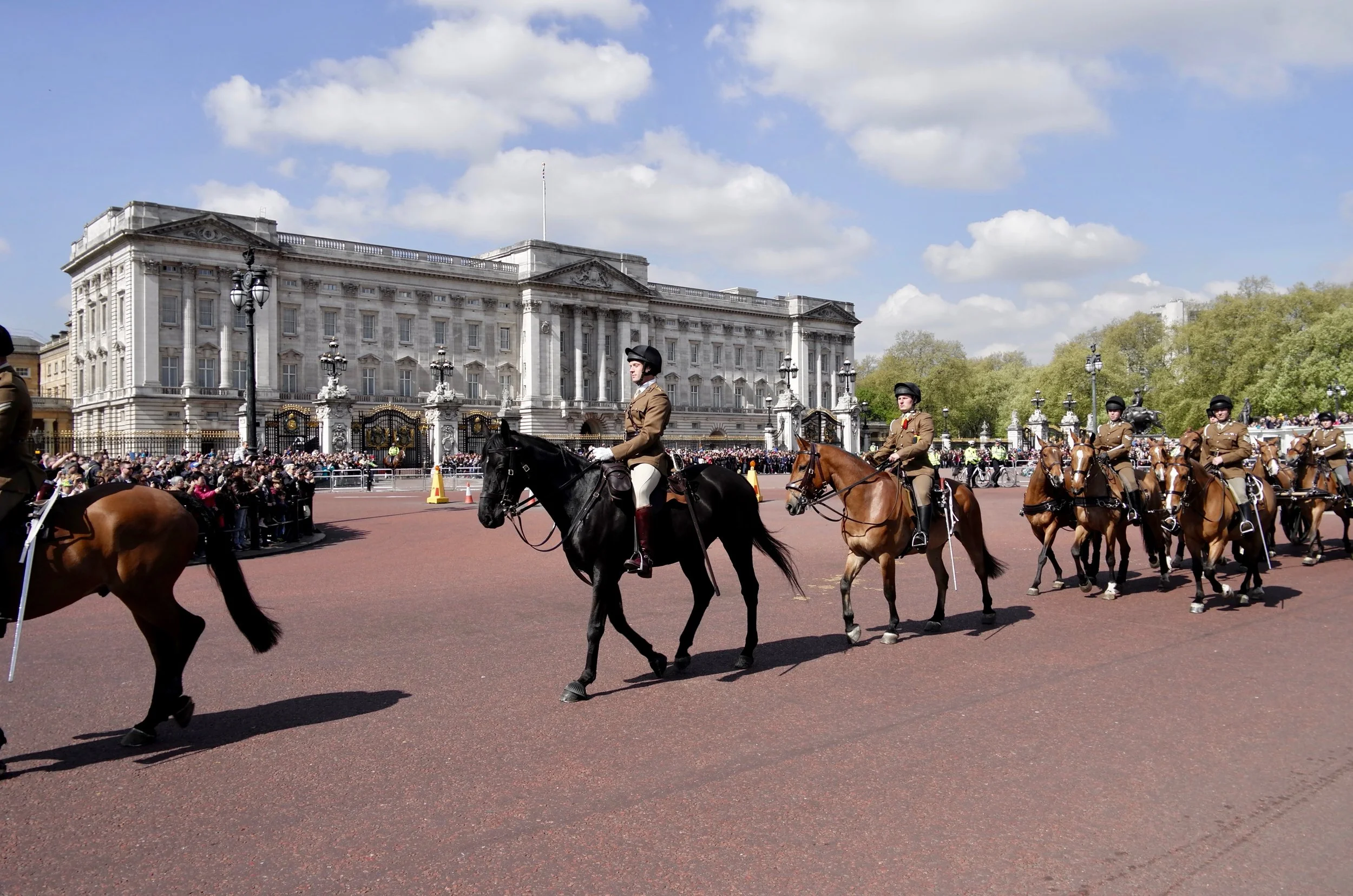
Changing the Guard at Buckingham Palace does not take place every day.
Currently the King's Guard at Buckingham Palace change on Mondays, Wednesdays and Fridays.
On other days (Tuesdays, Thursdays, Saturdays and Sundays), there is The Captain’s Inspection.
Always check as the Guard Change can be cancelled at short notice due to bad weather and as dates and times can change based on other ceremonial duties or major London Events. Good examples are, During Trooping the Colour in July, any State Visits, The London Marathon.
-
The official start time for Changing the Guard on the forecourt of Buckingham Palace is 11:00am. The Captain’s Inspection starts at 3.00pm.
Get there at least an hour before if you want to grab a good spot as it does get very busy, especially in the summer months.
We can recommend you by a copy of the digital guide to Changing the Guard at Buckingham Palace which includes maps and lots of other information to help you enjoy your visit.
-
No, the ceremony is free, however it does get busy so either an early arrival or choosing somewhere to stand that you can see them arriving or departing with a good view.
You can find more information about the best places to stand in the digital guidebook to Changing the Guard which you can purchase and download immediately.
-
Most people head for Buckingham Palace to watch the Changing the Guard, but the ceremony actually takes place between three locations -
Buckingham Palace
St. James's Palace
Wellington Barracks
St James’s Palace is where the ‘Old Guard’ get ready and parade, but it is a popular spot. In front of Buckingham Palace is also popular. One option is to stand on the other side towards the left as you look at the palace, you can see the guards arrive and leave and then follow the ‘Old Guard’ to Wellington Barracks where there is a better view of the short ‘falling out’ ceremony.
Our where to watch guide provides more information and suggestions, a digital version is available to buy and download here.
-
No, there is no public access to the forecourt of Buckingham Palace.
-
The Changing of the Guard takes place on the forecourt of Buckingham Palace and as such the only places to view the ceremony are from the public footpaths in front of the Palace railings or from the Victoria Memorial.
Sadly, as these are public footpaths there are no dedicated areas for wheelchair users.
However, in my experience, the best way to get a good view is to talk to one of the very friendly policemen on duty in front of the Palace as they are very helpful and adept at getting wheel chair users and those who need assistance into a position by the gates where they can see the ceremony.
A second option, which is less crowded is to head for Horse Guards Parade where The King's Life Guard mount daily at 11:00 Monday to Saturday and 10:00 on Sundays.
The parade ground is a level surface, covered in gravel, and there are no railings between visitors and the men and horses mounting the guard.
-
Yes! The King's Life Guard change daily on Horse Guards Parade at 11:00 Monday to Saturday and at 10:00 on Sunday's.
There is also a ‘4 O’clock Parade’ on the forecourt of Horse Guards at 16:00.
-
Changing the Guard at Windsor Castle takes place every Tuesday, Thursday and Saturday (so opposite days to the Guard Change at Buckingham Palace), so if you can really only spare these days then a trip out to Windsor Castle is the option. However please note that you will need to buy an entry ticket into Windsor Castle, so make a morning of it!
Alternatively, you can watch the guards marching to and from the Castle at the beginning and end of the ceremony, they leave Victoria Barracks at 10.45am and march up Windsor High Street.
The actual ceremony inside the castle takes approximately 30 minutes.
-
Although ceremonial duties are an important part of Army history and tradition, all the Foot Guards you see Changing the Guard at Buckingham Palace or Windsor Castle are first and foremost highly trained infantry soldiers who play an important part in military operations worldwide.
Many of the men you see on public duties will have recently been deployed overseas.
-
The King's Guard at Buckingham Palace consists of three officers and 40 men, when the Sovereign is in residence, otherwise it will comprise of three officers and 31 men.
When His Majesty the King is in residence you will see four sentries at the front of Buckingham Palace at other times there are two.
-
Up until 2018, women were not permitted to serve in close combat units (that is cavalry and infantry). However, after 2018 women are now able to apply to join infantry and cavalry units.
In April 2007, the first women in the British Army served on detachments of the King's Guard when the King's Troop, Royal Horse Artillery took over the guard at Windsor Castle.
-
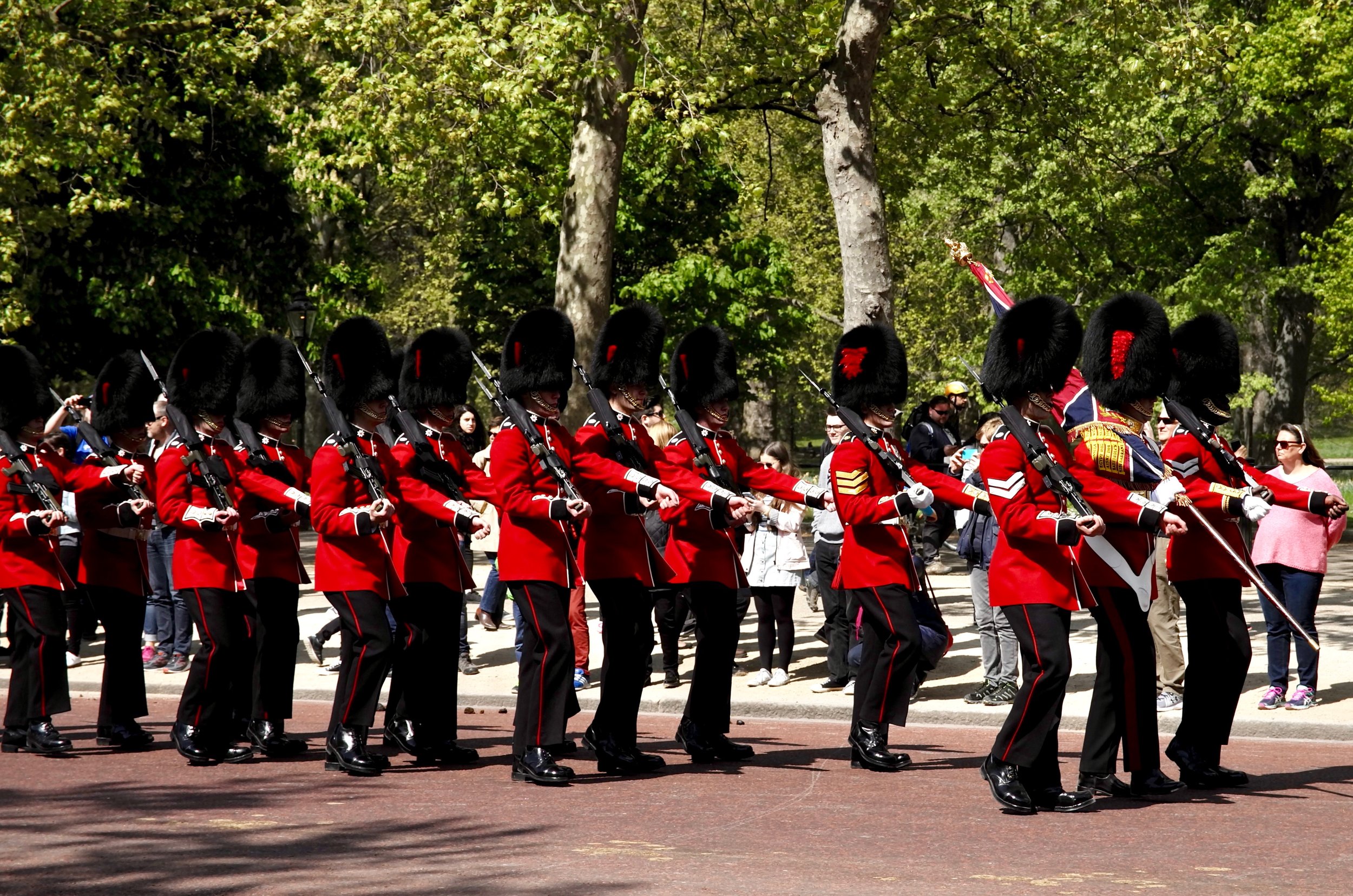
The King's Guard is the name given to the contingent of infantry responsible for guarding Buckingham Palace and St James's Palace (including Clarence House).
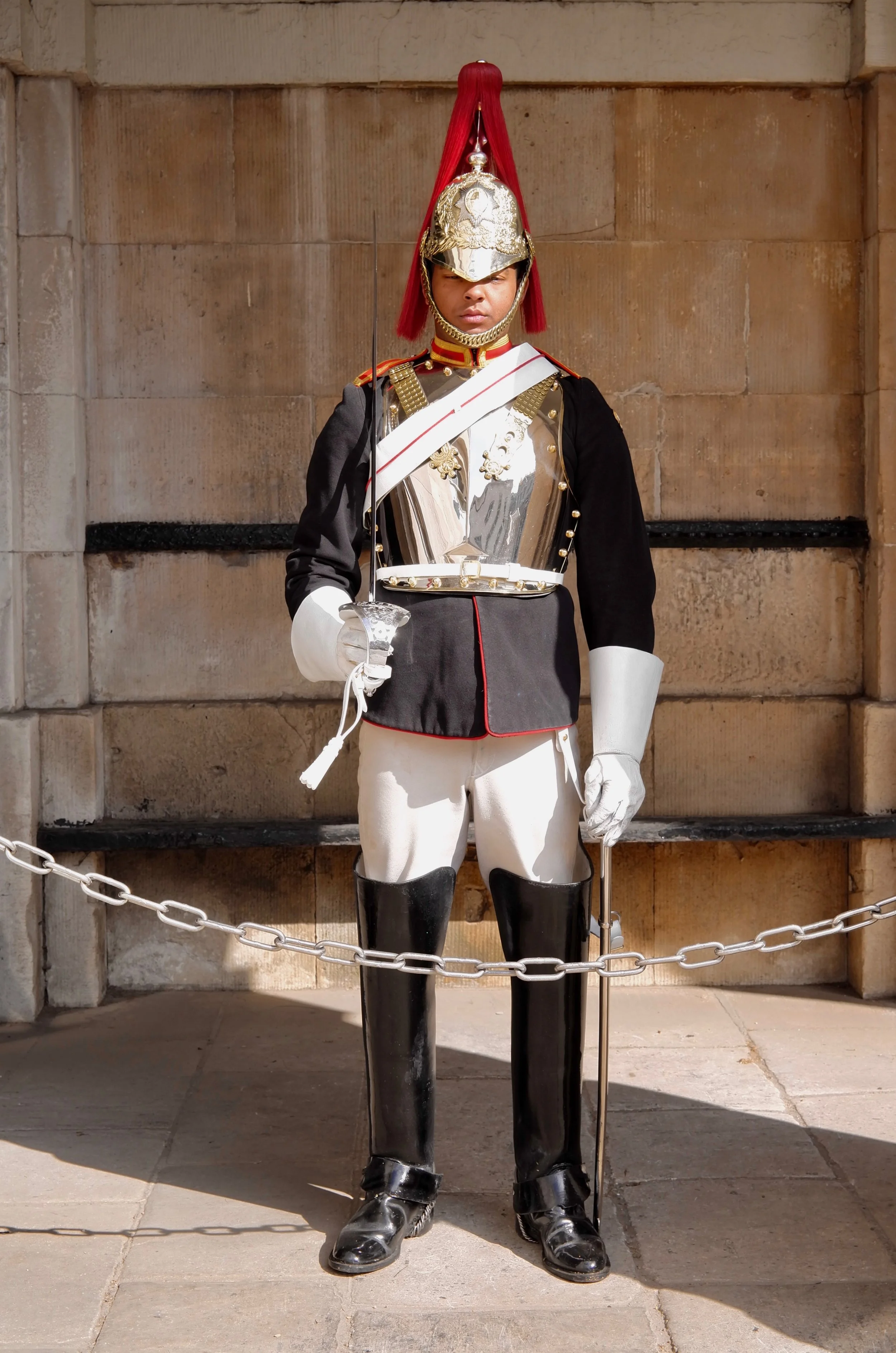
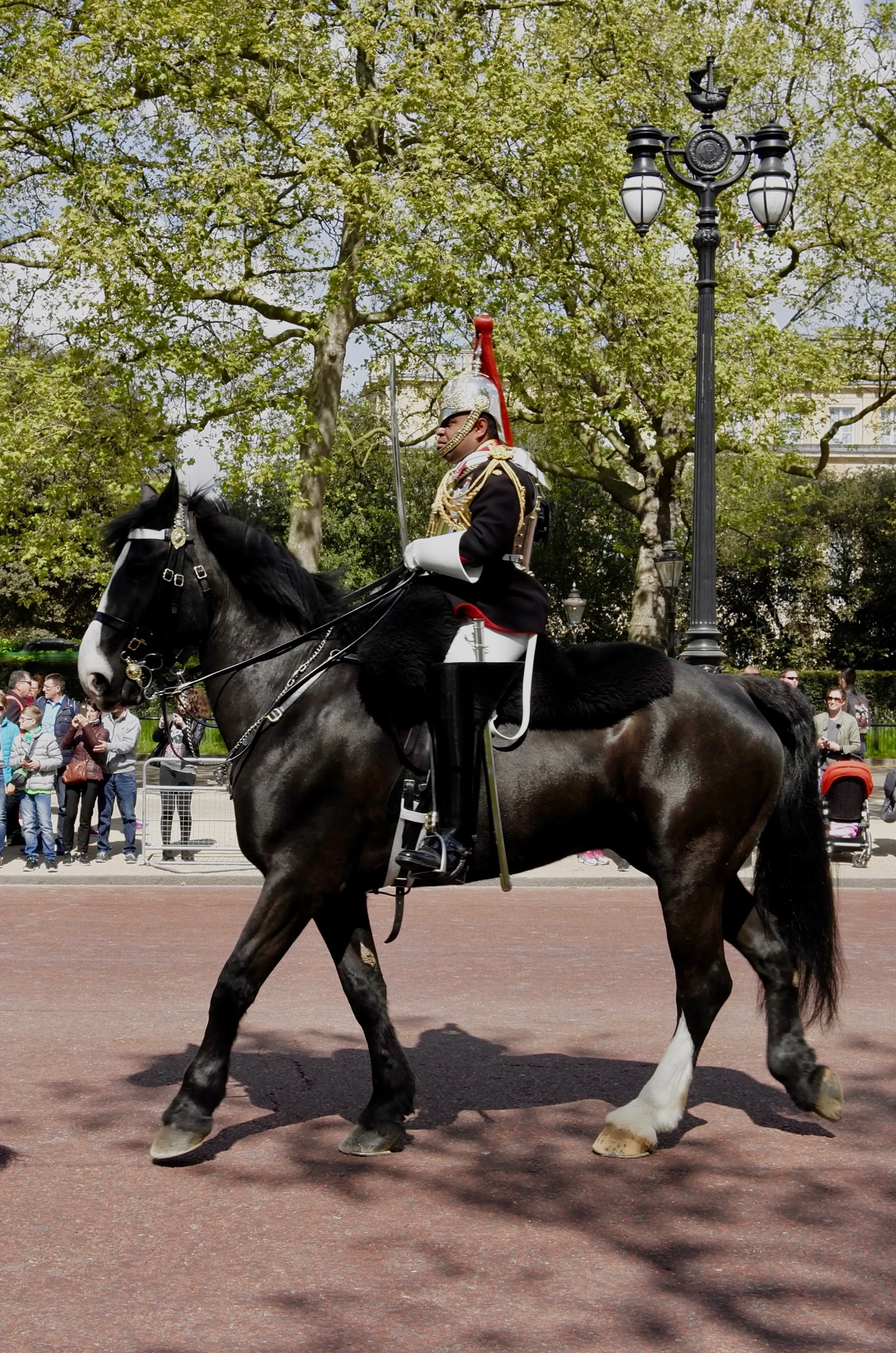
The King's Life Guard are the cavalry troops who stand guard at Horse Guards, the official entrance to Buckingham Palace and St. James's Palace.
-
The St. James Palace detachment of the Old Guard, normally led by a Band, march down the Mall to Buckingham Palace. The New Guard, led by a Band, will march along Birdcage Walk, from Wellington Barracks to the Palace.
A maps booklet, showing the routes 'The Guards' take before, during and after the Changing the Guard ceremony at Buckingham Palace, are available to buy and download for immediate reference here.
-
Bright colours provided a means of distinguishing friend from foe without significantly adding risk to the individual soldier as armies, in years gone by, formed up facing each other in ranks and columns on the battlefield where they engaged each other with volley fire, from muskets.
Some say the red coats, of the British troops, made it difficult for enemy spotters to count their strength because red, which is the hardest colour to see, merges into one at a distance.
While another popular myth was that blood would not show on the red tunics and demoralise the other troops.
Cost was probably the real reason as the dyeing process required, for red, involved only one stage and red pigment was readily available.
In 1658 the British redcoat made its first appearance at the Battle of the Dunes and the last time British soldiers wore red coats on the battlefield was at the Battle of Gennis in the Sudan in 1885.
Scarlet tunics continued to be issued until the outbreak of the First World War in 1914.
The Brigade of Guards resumed wearing their scarlet dress uniforms in 1920 but for the remainder of the army red coats were only authorised for wear by Regimental Bands and Officers in mess dress.
-
The bearskin cap's worn by the worn by the five regiments of Foot Guards are 18 inches, (45.72cm), tall and weigh 1.5 pounds, (453grm).
-
Horse Guards, which faces Whitehall, is the official entrance to the Court of St James's and Buckingham Palace.
Since the Restoration of King Charles II in 1660 there have been Life Guards on duty at Horse Guards and you can see the King's Life Guard change daily on Horse Guards Parade.
The gate was the entrance to Whitehall Palace (so it was the other way round) and it led out directly onto parkland (Horse Guards Parade and St James’ Park and beyond). The Royals would exit these gates to go hunting.
When Buckingham Palace was purchased as the new Palace the entrance at Whitehall remained the official entrance to the Palace, which is why, on state visits, Heads of State always pass through Whitehall.
-
It is not possible to see the Changing of the Guard from the State Rooms or the gardens of Buckingham Palace.
The reason is that the State Apartments are mainly in the West wing of the Palace, while Changing the Guard takes place on the forecourt in front of the East wing.
With the average tour, of the State Rooms and gardens, lasting around two hours and first admissions at 09:45, the answer, if you want to do both on the same day, is to visit Changing the Guard first.